A Designer's Take on a Witty Embroidery Statement
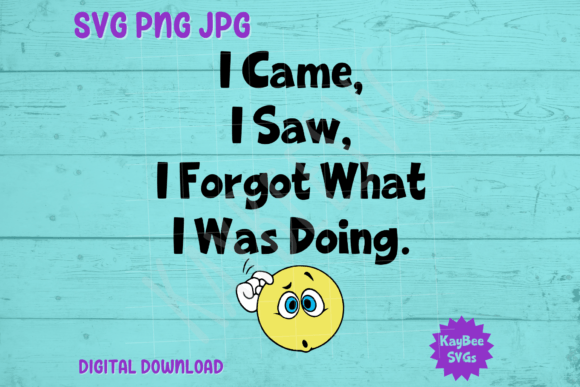
As someone who turns embroidery files into real products for clients and my own shop, I look at a design not just as a graphic, but as a future physical object. When I saw the I Came I Saw I Forgot What I Was Doing design, my first thought wasn't about the file itself, but about the person who would eventually wear it or receive it as a gift. It’s a perfect example of a T-Shirt Design that transcends its category—it’s a mood, a relatable joke, and a potential conversation starter stitched onto fabric.
The Immediate Personality & Project Fit
The phrase has an informal, self-deprecating charm that feels genuinely human. It’s not overly aggressive or sugary; it lands in that comfortable zone of friendly humor. This makes it incredibly versatile for personalized gifts and custom apparel. I immediately pictured it on a relaxed-fit sweatshirt for a friend who’s always juggling projects, or as a subtle, witty detail on the corner of a canvas tote bag for a creative entrepreneur. The visual personality is lighthearted, so it naturally fits casual, everyday items rather than formal products.
Where This Design Thrives After Stitching
In practical embroidery situations, this text-based design performs well on stable, medium-weight fabrics. Think classic cotton t-shirts, sturdy tote bags, denim aprons, or the front panel of a pillow cover in a living room. The simplicity of the layout—likely a single line or a short stacked text block—means stitch density is manageable. You won’t be dealing with massive fill stitch areas that can stiffen a lightweight tee. It’s a fantastic choice for holiday gifts like embroidered kitchen towels or a quirky caps for a gardening buddy, where the message adds a personal touch without being overly ornate.
For small business owners and Etsy sellers, this design translates easily into printable mockups and real finished products. Its clear message has high recognition value, which helps in customer engagement. Stitched onto a high-quality sweatshirt or bag, it elevates a basic item into a handmade product with character, boosting perceived value. I’ve found that clients and buyers appreciate this kind of witty, well-executed embroidery—it feels thoughtful and professional, reinforcing customer trust in your craft.
Careful Application: Where to Think Twice
While versatile, a design like this requires some forethought in specific scenarios. The potential challenge lies in the lettering details. If the embroidery file has very small or tightly spaced script, you’ll need to be cautious.
- Small hoop sizes on intricate fonts can lead to compromised clarity.
- On highly textured fabrics like some sweater knits or thick canvas, fine details might get lost.
- Embroidering on stretchy fabric without the right stabilizer could distort the clean lines of the text.
- For dark fabric, careful thread color contrast is key—a bright, crisp thread color will make the humor pop, while a poor choice could render it unreadable.
- Applying it to curved surfaces like the front of a cap requires testing to ensure the text layout adapts well to the shape.
The design likely wouldn’t be my first pick for items requiring frequent, heavy washing, like baby clothes, unless it’s scaled appropriately and stitched with durable threads and techniques. For baby embroidery, I’d lean toward simpler, larger graphics on bibs or nursery decor instead.
The Real-World Embroidery Scenario: A Boutique Tote Bag
Let’s walk through a typical use case. Imagine I’m preparing a batch of embroidered tote bags for my small shop’s summer market lineup. I choose a natural canvas bag. The I Came I Saw I Forgot What I Was Doing design, stitched in a forest green satin stitch for the main letters with a simple running stitch outline, becomes the sole decoration on the front pocket.
After stitching, the result is clean and legible. The humor is instantly apparent, making the bag feel unique and approachable. At the craft fair, it’s not just a bag; it’s a product with a personality. It attracts buyers who see it as a gift for a busy friend or a fun accessory for themselves. This is where the design asset proves its worth—it creates a handmade presentation that supports brand consistency for a shop specializing in playful, quality goods.
Practical Notes for the Working Designer
Before committing this to a client project or a batch of merchandise, here’s my standard practice checklist for a graphic like this:
- Always test the design on scrap fabric first, using the same material and stabilizer you plan for the final product.
- Check the stitch density in your software preview; a text-heavy design can sometimes be denser than expected.
- Run a black and white mockup to assess pure form, and compare it on both light and dark background simulations.
- Confirm the physical hoop size needed for the size you intend to output. Don’t assume.
- Inspect the file for any tiny decorative accents or punctuation that might need adjustment for your machine.
- Most critically, confirm licensing before selling finished items or using it in commercial embroidery projects. The product description mentions it’s for upgrading and personalizing items, but clarity on digital product resale or mass production is essential.
Since the provided description doesn’t specify exact file formats or licensing details, it’s a necessary step to reach out to the seller to understand if it’s suitable for craft business use, digital embroidery file bundling, or solely for personal projects.
Final Impressions: A Reliable, Engaging Asset
The I Came I Saw I Forgot What I Was Doing embroidery design is a strong, engaging choice for makers who want to inject personality into their work. It’s not a overly complex applique design or a massive scenic piece; it’s a smart, text-based graphic that communicates effectively through stitch. Its value lies in its relatable message and its adaptability to a wide range of embroidery projects—from a single personalized gift to a repeated item in a small shop product lineup.
When stitched with attention to fabric choice, thread color, and technique, it becomes a high-quality, professional-looking finish that customers and recipients genuinely enjoy. For the designer or crafter, it’s a straightforward asset that, with proper testing and licensing checks, can reliably become a part of your creative or commercial toolkit.